x068 COLLÈGE ROUSSEAU [2025]
Genève, CH
Burckhardt Architecture
Concrete




Un bâtiment brutaliste existant réalisé en 1969 et développé par l’architecte Alain Ritter et un maître d’ouvrage avec l’esprit de réutiliser et de conserver autant que possible le caractère et la matérialité du bâtiment, mais avec la nécessité de l'élargir.
Burckhardt architecture propose une solution, premier prix après un concours ouvert en deux phases, qui combine la nécessité d'agrandir l'école avec une stratégie respectueuse du bâtiment existant : L'agrandissement se concentre sur un étage supplémentaire, qui, bien qu'il conserve le même aspect extérieur (préfabriqué en béton) avec de subtiles adaptations formelles pour se présenter ouvertement comme une extension, change radicalement de structure, proposant un maillage léger de piliers et de poutres en bois lamellé, qui permettent de maintenir sans renfort la structure et les fondations existantes.
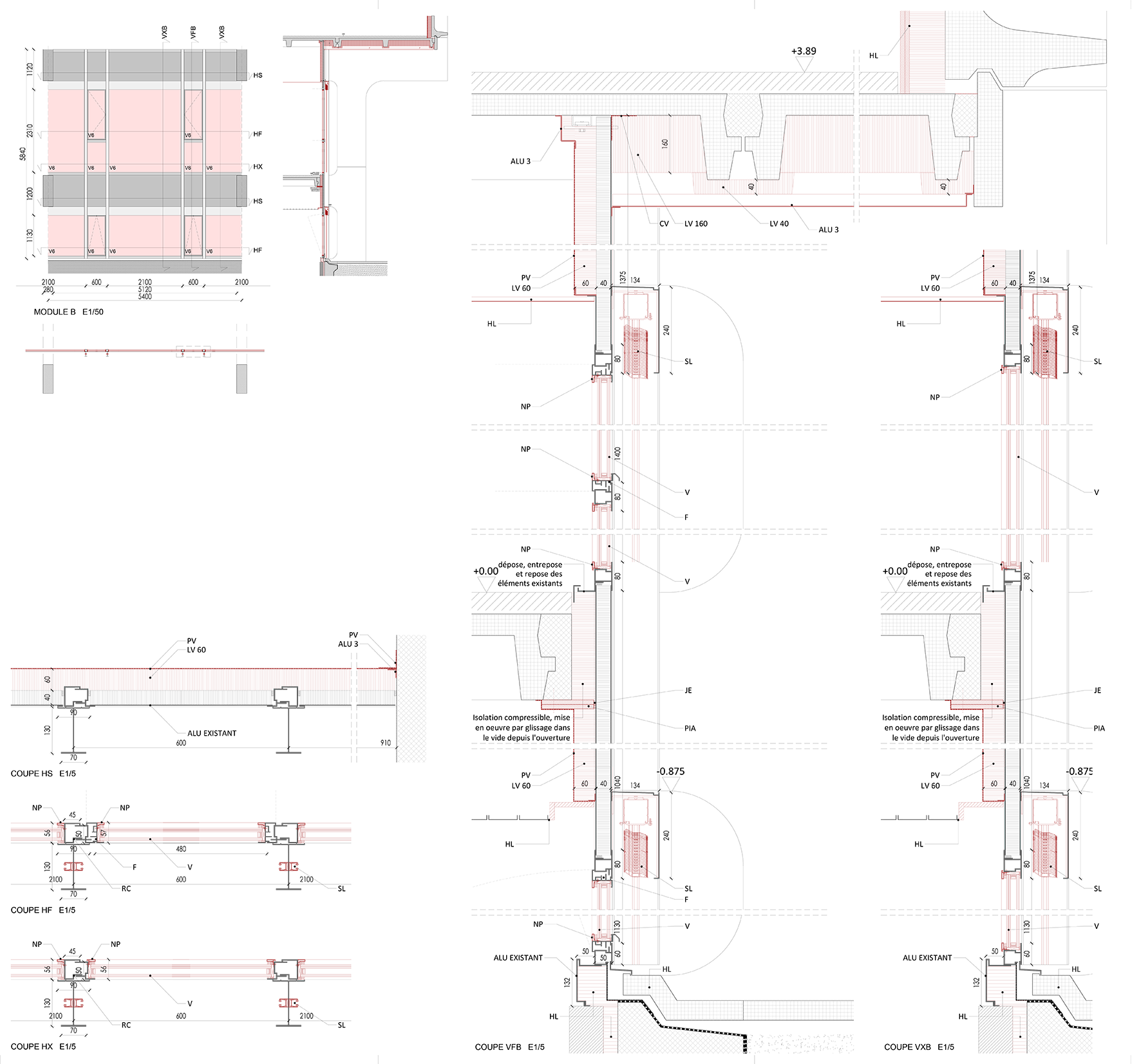
Les belles menuiseries en aluminium du socle (rez-de-chaussée et premier étage) sont conservées dans leur intégralité. Seuls les vitrages sont remplacés et l'isolation est renforcée dans les zones qui ne sont pas visibles depuis l'intérieur. Aux étages supérieurs, afin d'obtenir un niveau équilibré de performance énergétique (HPE et THPE) et avoir la possibilité d'une ventilation naturelle dans toutes les salles de classe, les fenêtres et leurs protections solaires doivent être remplacées par de nouvelles menuiseries automatisées en aluminium recyclé.
Équipe
Architecture : Burckhardt Architecture / Ingénieur Civil : Thomas Jundt Ing. Civils / Ing. Électricité : Betelec / Physique du Bâtiment : Enpleo / Acoustique : BatJ / Entreprise Préfabriqués Béton : MFP / Entreprise Façade : CMA / Planification Façade : xmade / Photographie : Olivier di Giambattista, avec l'aimable autorisation de Burckhardt Architecture
An existing brutalist building constructed in 1969 and designed by architect Alain Ritter and a client with the aim of reusing and preserving as much as possible the character and the materiality of the building, but with the need to expand it.
Burckhardt Architecture proposed a solution, which won first prize in a two-stage open competition, combining the need to expand the school with a strategy that respects the existing building: The extension focuses on an additional floor, which, although it retains the same external appearance (prefabricated concrete) with subtle formal adaptations to openly present itself as an extension, it radically changes the structure, proposing a light grid of laminated wood posts and beams, which allow the existing structure and foundations to be maintained without reinforcement.
The beautiful aluminium carpentry of the plinth (ground floor and first floor) is preserved in its entirety. Only the glazing is replaced and the insulation reinforced in areas that are not visible from the inside. On the upper floors, in order to achieve a balanced level of energy performance (HPE and THPE) and allow for natural ventilation in all classrooms, the windows and their sun protection systems have been replaced with new recycled aluminium automatic windows.
Team
Architecture : Burckhardt Architecture / Structural Engineering : Thomas Jundt Ing. Civils / Electric Eng. : Betelec / Building Physics : Enpleo / Acoustics : BatJ / Concrete Prefab elements : MFP / Façade elements : CMA / Façade Planning : xmade / Photography : Olivier di Giambattista, courtesy of Burckhardt Architecture
x068 COLLÈGE ROUSSEAU [2025]
Genève, CH
Burckhardt Architecture
Concrete
Un bâtiment brutaliste existant réalisé en 1969 et développé par l’architecte Alain Ritter et un maître d’ouvrage avec l’esprit de réutiliser et de conserver autant que possible le caractère et la matérialité du bâtiment, mais avec la nécessité de l'élargir.
Burckhardt architecture propose une solution, premier prix après un concours ouvert en deux phases, qui combine la nécessité d'agrandir l'école avec une stratégie respectueuse du bâtiment existant : L'agrandissement se concentre sur un étage supplémentaire, qui, bien qu'il conserve le même aspect extérieur (préfabriqué en béton) avec de subtiles adaptations formelles pour se présenter ouvertement comme une extension, change radicalement de structure, proposant un maillage léger de piliers et de poutres en bois lamellé, qui permettent de maintenir sans renfort la structure et les fondations existantes.
Les belles menuiseries en aluminium du socle (rez-de-chaussée et premier étage) sont conservées dans leur intégralité. Seuls les vitrages sont remplacés et l'isolation est renforcée dans les zones qui ne sont pas visibles depuis l'intérieur. Aux étages supérieurs, afin d'obtenir un niveau équilibré de performance énergétique (HPE et THPE) et avoir la possibilité d'une ventilation naturelle dans toutes les salles de classe, les fenêtres et leurs protections solaires doivent être remplacées par de nouvelles menuiseries automatisées en aluminium recyclé.
Équipe
Architecture : Burckhardt Architecture / Ingénieur Civil : Thomas Jundt Ing. Civils / Ing. Électricité : Betelec / Physique du Bâtiment : Enpleo / Acoustique : BatJ / Entreprise Préfabriqués Béton : MFP / Entreprise Façade : CMA / Planification Façade : xmade / Photographie : Olivier di Giambattista, avec l'aimable autorisation de Burckhardt Architecture
An existing brutalist building constructed in 1969 and designed by architect Alain Ritter and a client with the aim of reusing and preserving as much as possible the character and the materiality of the building, but with the need to expand it.
Burckhardt Architecture proposed a solution, which won first prize in a two-stage open competition, combining the need to expand the school with a strategy that respects the existing building: The extension focuses on an additional floor, which, although it retains the same external appearance (prefabricated concrete) with subtle formal adaptations to openly present itself as an extension, it radically changes the structure, proposing a light grid of laminated wood posts and beams, which allow the existing structure and foundations to be maintained without reinforcement.
The beautiful aluminium carpentry of the plinth (ground floor and first floor) is preserved in its entirety. Only the glazing is replaced and the insulation reinforced in areas that are not visible from the inside. On the upper floors, in order to achieve a balanced level of energy performance (HPE and THPE) and allow for natural ventilation in all classrooms, the windows and their sun protection systems have been replaced with new recycled aluminium automatic windows.
Team
Architecture : Burckhardt Architecture / Structural Engineering : Thomas Jundt Ing. Civils / Electric Eng. : Betelec / Building Physics : Enpleo / Acoustics : BatJ / Concrete Prefab elements : MFP / Façade elements : CMA / Façade Planning : xmade / Photography : Olivier di Giambattista, courtesy of Burckhardt Architecture